Nestled in the Gulf of Gabès, off the south-eastern coast of Tunisia, Djerba is far more than an island — it is a legend. Known as the island of the Lotus-Eaters, it is said to have bewitched Ulysses himself during his Odyssey, lured by the sweetness of its fruits and the gentleness of its landscapes. It is easy to understand why he struggled to leave.
Spanning 514 km², it is the largest island on the North African coast. The land is almost entirely flat — its highest point, Dhahret Guellala, barely reaches 53 metres — lending the island a quiet, unhurried character that has earned it its beloved nickname: Djerba la Douce, the Sweet Island.
Miles of fine golden sand, crystal-clear turquoise waters and an abundance of sunshine make Djerba an unmissable destination, with a wide range of accommodation to suit every type of traveller. Here, authenticity, a thousand years of history and the Mediterranean Sea come together in perfect harmony — inviting you to slow down, breathe, and perhaps, like Ulysses, never want to leave.
HOUMT SOUK
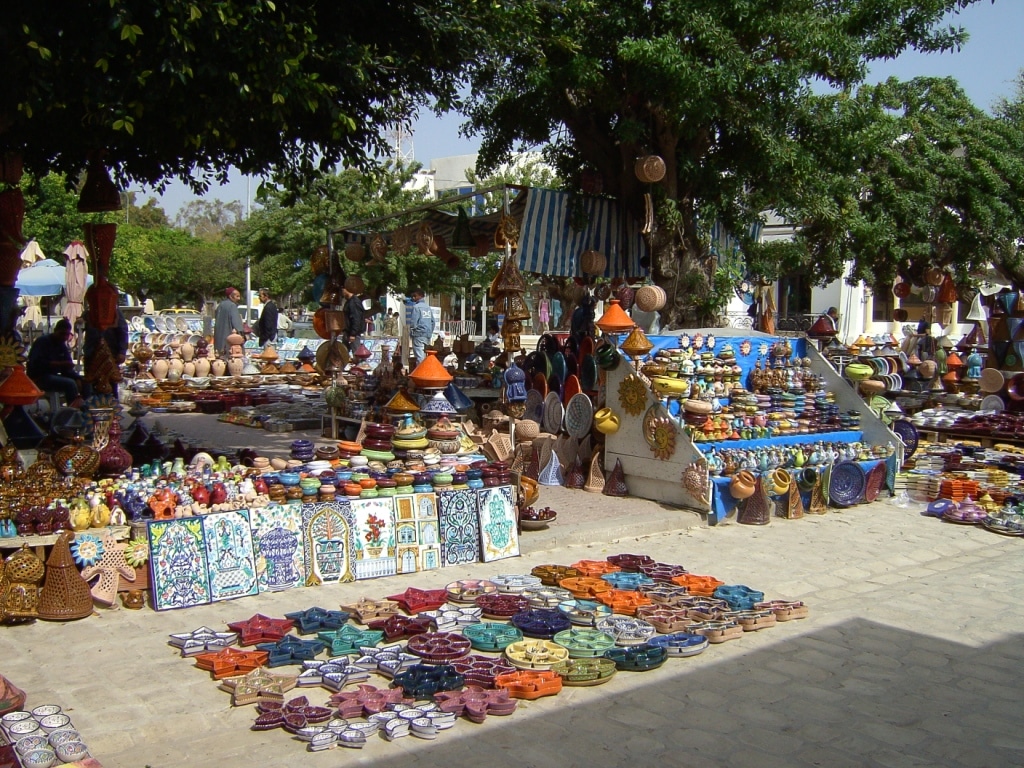
The vibrant capital of the island, Houmt Souk embodies the very essence of Tunisian island life. Its name says it all: the market quarter. Here, trade is a centuries-old tradition, and every street, every archway has a story to tell.
The town is renowned for its two weekly markets, held on Mondays and Thursdays, where locals and visitors alike gather in a wonderfully warm and colourful atmosphere. The covered souks, sheltered beneath their characteristic barrel-vaulted arcades, are a labyrinth of fragrant alleyways lined with fabrics, rugs, ceramics and handcrafted goods of every kind.
Do not miss the jewellers' souk, where skilled artisans carry on goldsmithing techniques passed down through generations, nor the fish market, where the lively morning auction still draws a crowd every single day.
Pottery, leather goods, silver jewellery, aromatic spices, intricate embroidery... Houmt Souk is an open invitation to wander, haggle and let yourself be surprised at every turn. Few places on the island capture the soul of Djerba quite like it.
THE PORT
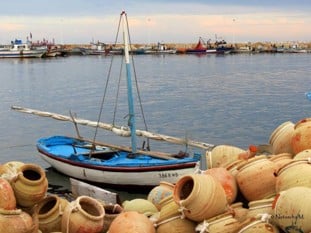
No visit to Houmt Souk would be complete without a leisurely stroll along its harbour. Amid colourful fishing boats and nets drying in the sun, you witness a captivating daily ritual — fishermen returning with their morning catch in an atmosphere of simple, unhurried authenticity.
In recent years, a marina has taken shape along the waterfront, dotted with cafés and restaurants gazing out over the sea. Pull up a chair on one of the terraces and let time simply stop. Traditional Moorish cafés line the shaded squares where old men while away the hours over dominoes, in that slow, dreamy atmosphere so wonderfully, unmistakably Djerbian.
Sip a sweet mint tea, a strong Turkish coffee, or give in to the temptation of a shisha — apple, rose or mint — as you watch the boats sway gently on the water. A moment of pure Mediterranean bliss, best enjoyed with absolutely no rush at all.
HERITAGE
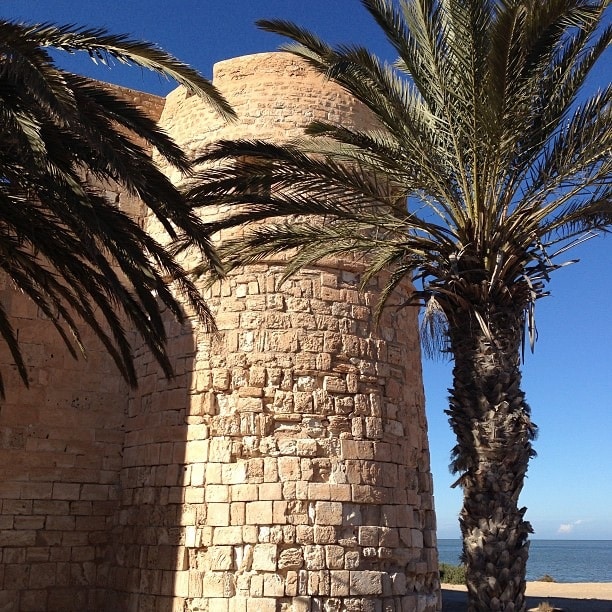
Standing directly beside the port of Houmt Souk, Fort Ghazi Mustapha — also known as Borj El Kebir, meaning the Great Fort — is one of the most historically charged monuments in the entire Mediterranean. Its origins date back to the 15th century, when it was built under the Hafsid dynasty to defend the island against seaborne invasions.
One of the most dramatic chapters in its history unfolded in 1560, when Spanish forces, overwhelmed by the Ottoman army led by the feared corsair Dragut, sought refuge within its walls after a crushing defeat at sea. Trapped and outmatched, they were slaughtered in what remains one of the bloodiest episodes in the island's history — between 5,000 and 6,000 defenders lost their lives in the assault.
In the wake of his victory, Dragut ordered the construction of a tower of skulls — the Borj er-Rous — built from the bones of the fallen soldiers. A macabre symbol of power, it was designed to strike fear into enemies and assert Ottoman dominance over the region. This grim monument stood until 1848, when it was torn down and replaced by a 9-metre obelisk that stands to this day in memory of that tragic episode.
From the fort's ramparts, visitors are rewarded with sweeping views over the town and the Mediterranean coastline. A place where history, legend and a touch of the spine-tingling converge — not to be missed.
GUELLALA
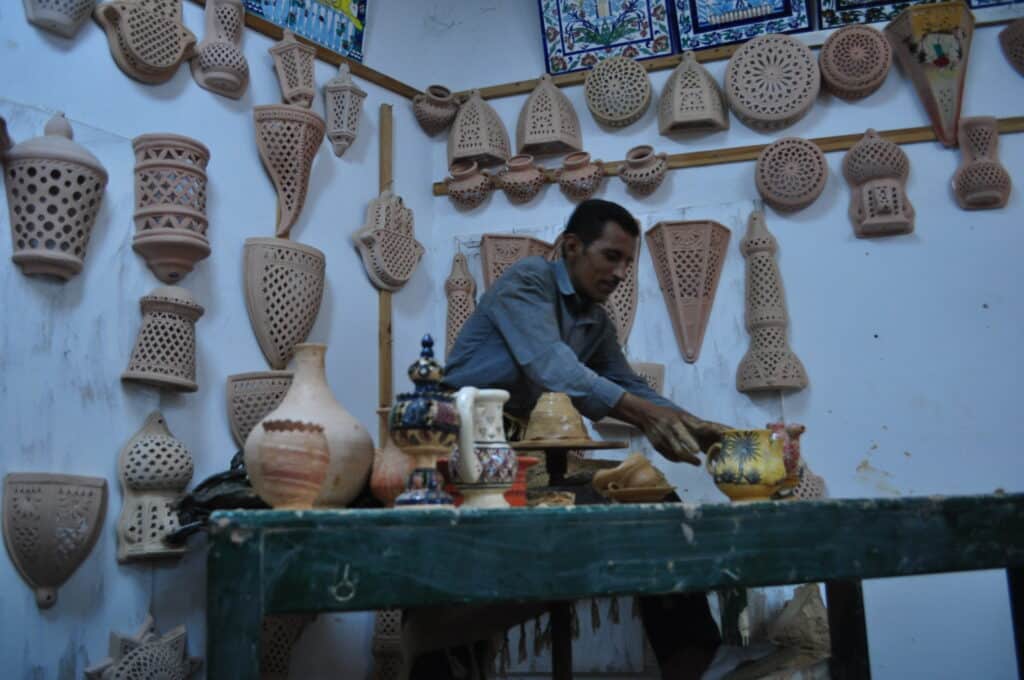
Guellala is the island's potters' village, where craftsmen still work today using age-old techniques passed down through generations. Perched on the highest hill on the island, the Museum of Arts and Traditions offers a fascinating window into the soul of Djerba. Inside, you will discover the island's distinctive architecture through its traditional dwellings known as Menzels, alongside ancient customs and ways of life that remain very much alive in the daily existence of the Djerbians. A quiet, unhurried place — and all the more precious for it.
Fed by a handful of precious freshwater reserves, Mahboubine is the island's one and only oasis — a verdant secret tucked away amid the otherwise arid landscape. These are in fact private gardens of remarkable lushness, where thousands of date palms, olive trees, pomegranate trees and citrus groves create a canopy of shade and colour that feels almost out of place on this sun-baked island.
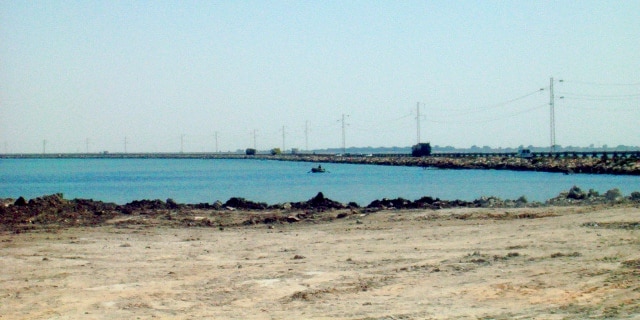
Beyond this green haven, much of Djerba is semi-desertic, and freshwater is a scarce commodity. Part of the island's supply is brought in from the mainland via pipelines running alongside the ancient Roman Causeway — a quiet reminder of just how precious every drop of water is on this sun-drenched island.
THE ROMAN CAUSEWAY
Stretching along the southern edge of the island, the Roman Causeway is one of Djerba's most remarkable landmarks — an ancient road that has linked the island to the mainland for centuries, and continues to do so to this day.
Further west lies Ajim, a charming fishing port with a character all of its own. Long celebrated for its sponge divers — a tradition that once defined the livelihoods of entire families — the village retains a raw, working authenticity rarely found in the more touristic parts of the island. A regular ferry service also operates from Ajim, offering an alternative and scenic crossing to the mainland.
Midoun is the second largest town on the island. Closer to the tourist area than the capital, it draws many visitors on Friday mornings for its bustling weekly market — a lively and colourful affair that offers a genuine glimpse into everyday Djerbian life.
In the village of Erriadh stands the Ghriba Synagogue, one of the oldest synagogues in the world and one of the most important Jewish pilgrimage sites in North Africa.
Over the centuries, Djerba has been shaped by countless invasions and influences. Today, it stands as a haven of peace and a living symbol of a rare and precious coexistence. Bearing witness to this centuries-old tolerance is the presence of a Jewish community — one of the oldest and most deeply rooted in the Arab world — living in harmony alongside its Muslim neighbours.
DJERBAHOOD
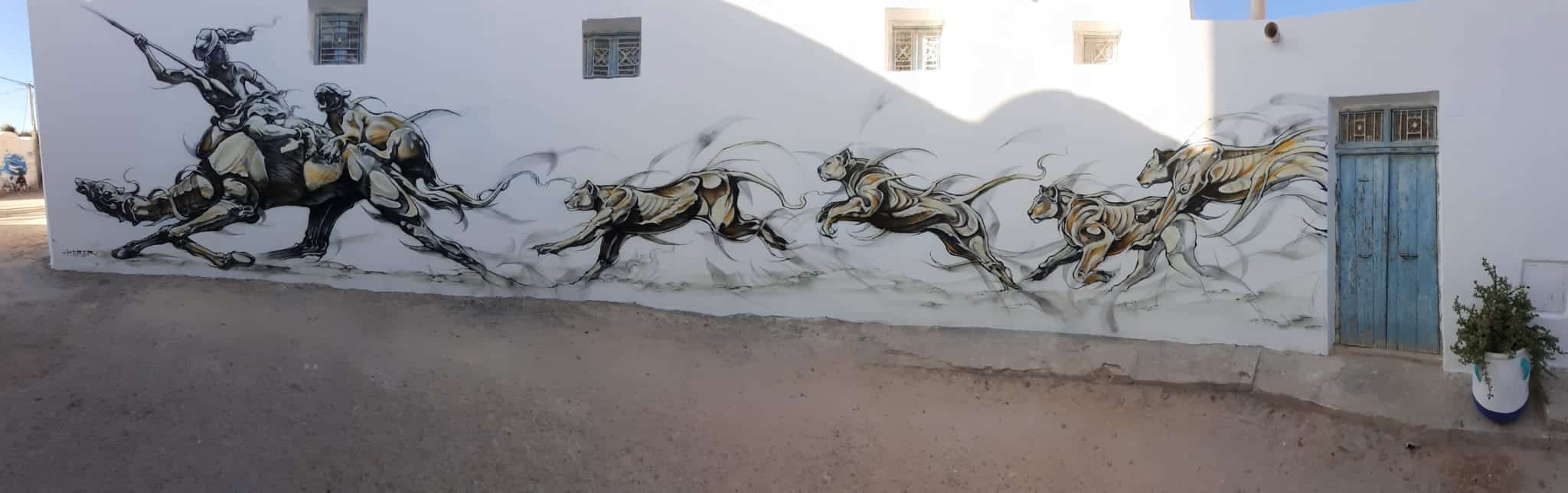
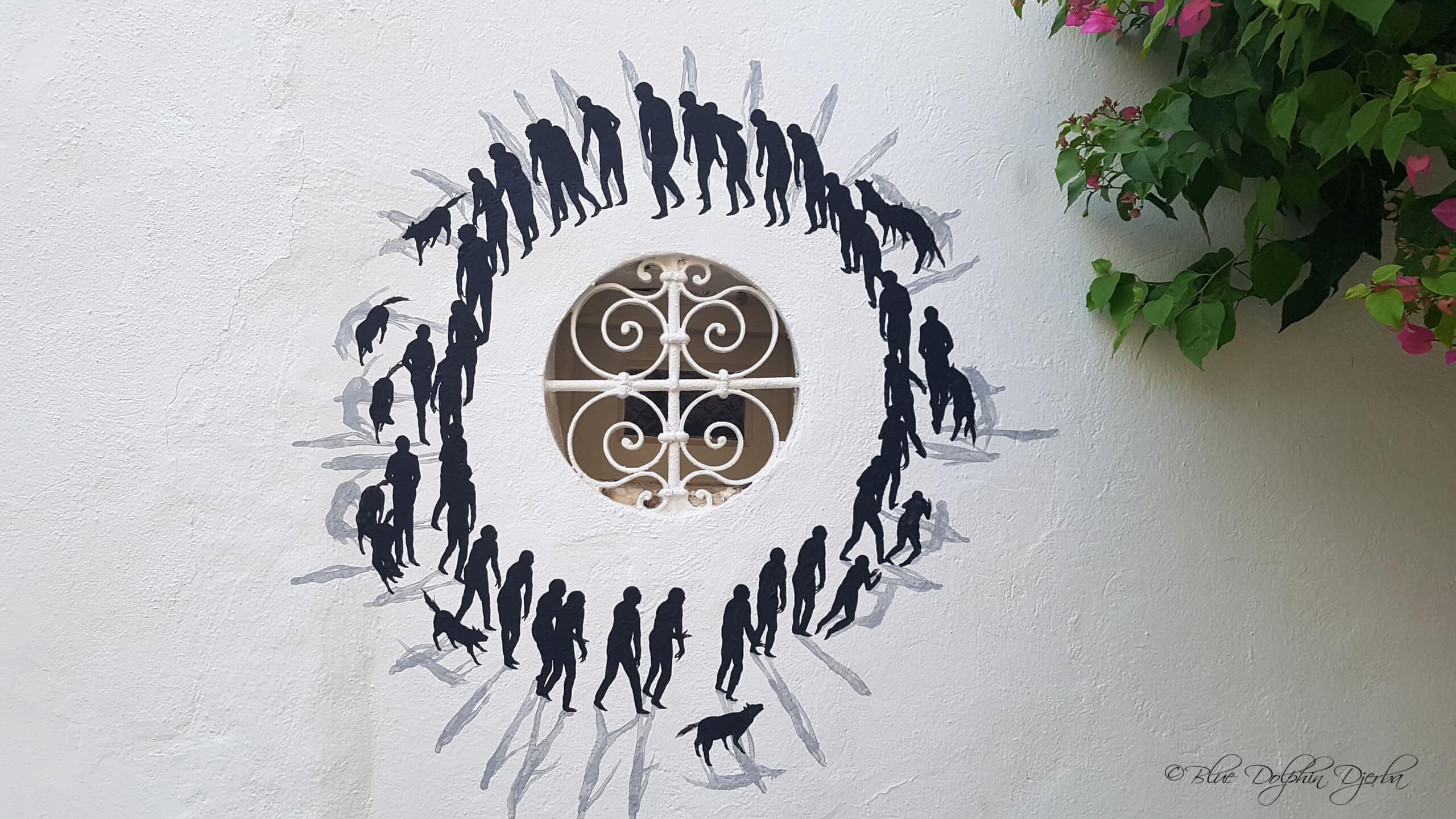
In 2014, Mehdi Ben Cheikh, founder of the Itinerrance gallery in Paris, approached the residents of Erriadh with a bold proposal: to transform their village into an open-air street art museum — a collective and immersive work of art rooted in its surroundings. Over 250 murals were created by artists from every corner of the globe.
The project was revived in 2022 with renewed ambition, as part of the Tounes Wijhetouna programme funded by the European Union, with the support of the Tunisian Ministries of Tourism and Cultural Affairs. What began as a creative experiment has since grown into a lasting initiative and a powerful vehicle for preserving the island's thousand-year-old heritage. Erriadh has been transformed into a true open-air museum, where new murals continue to appear regularly — keeping the village in a constant state of reinvention.
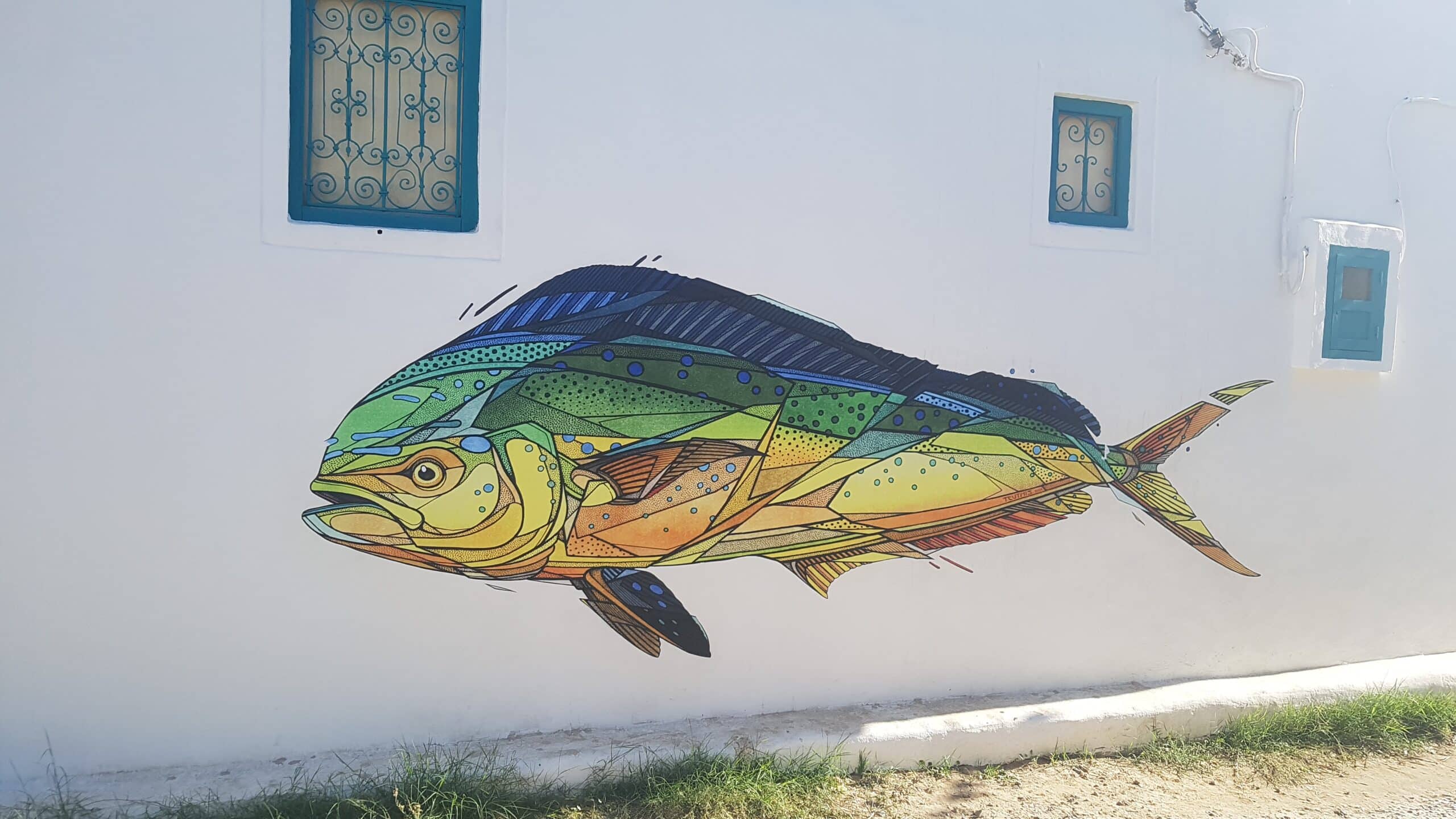
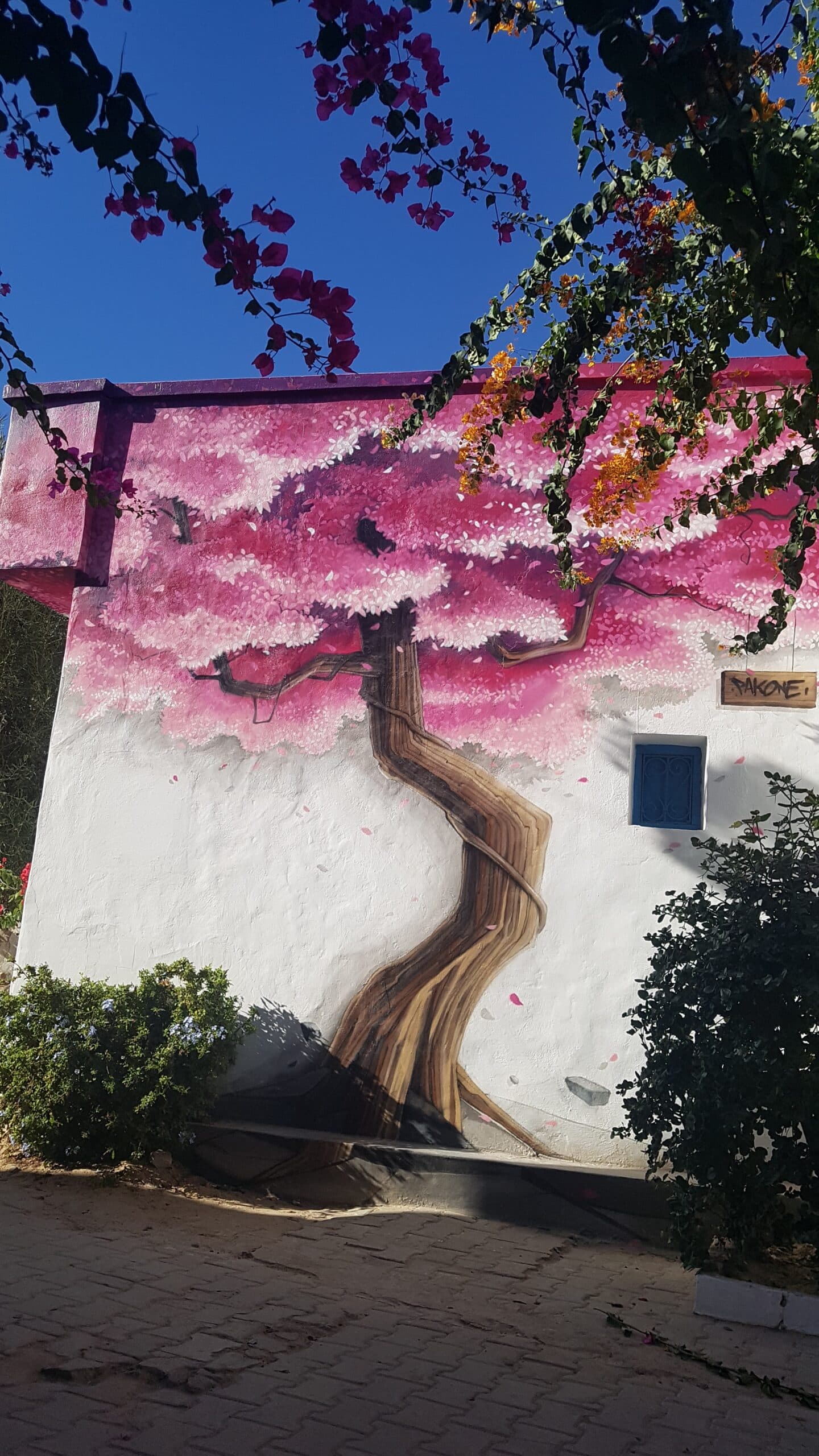
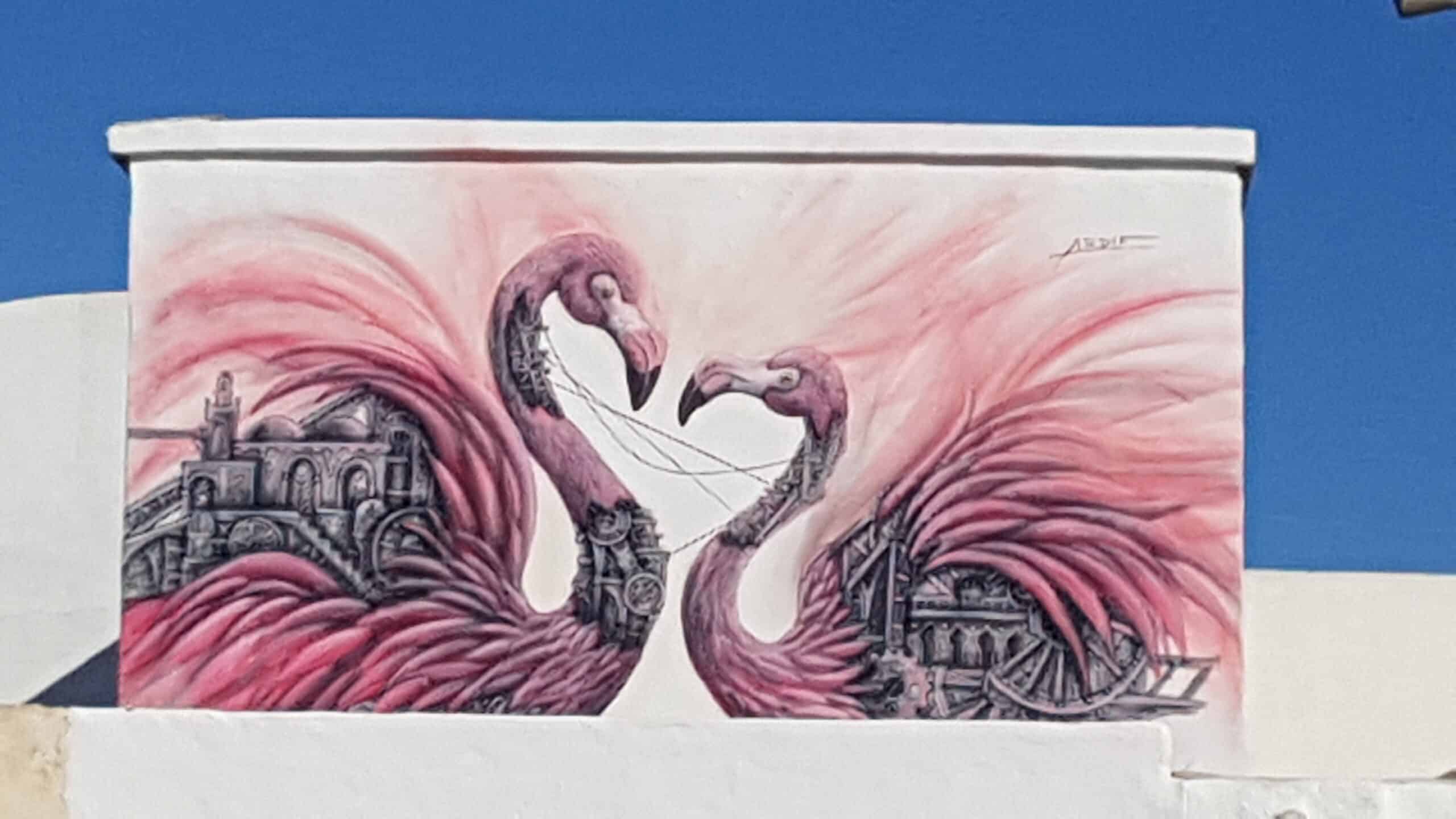
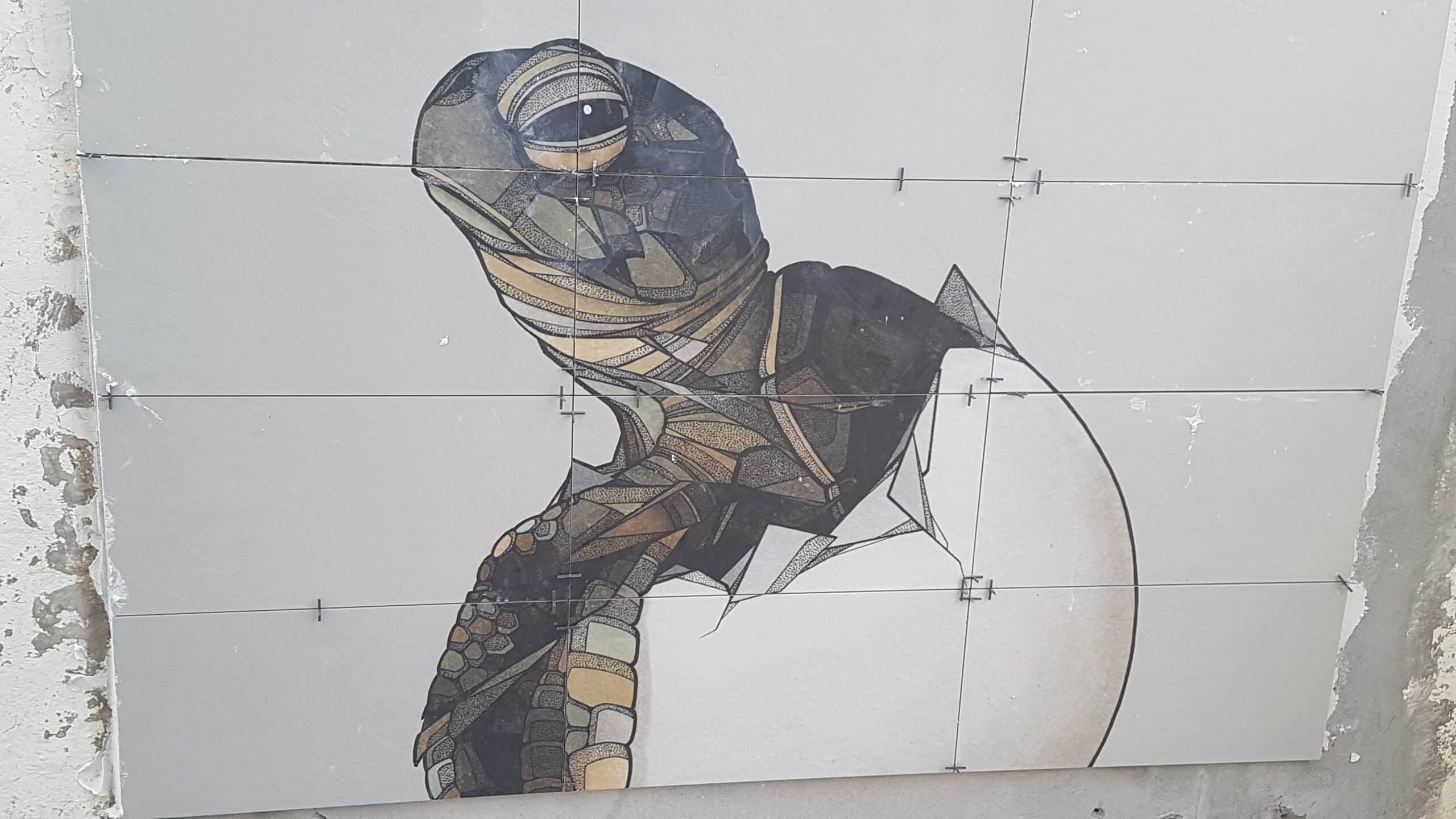
Djerbahood mural — turtle hatching from an egg
GETTING AROUND
Taxis are the most practical way to get around the island. Very affordable by European standards, all taxis are fitted with an approved meter and operate at regulated fares. One important detail: taxis are not permitted to leave the island. For journeys to the mainland, louages — shared intercity taxis — operate from the Roman Causeway.
Car rental is available in the tourist area, in Houmt Souk and Midoun. This is the ideal option for exploring the island at your own pace, as distances are very manageable.
At almost every hotel, you can rent a scooter or a bicycle — two enjoyable and affordable ways to discover the island's peaceful roads and coastal tracks.
LEISURE
Scuba diving & snorkelling — Mediterranean seabeds, shipwrecks and abundant marine life provide perfect dive sites for all levels.
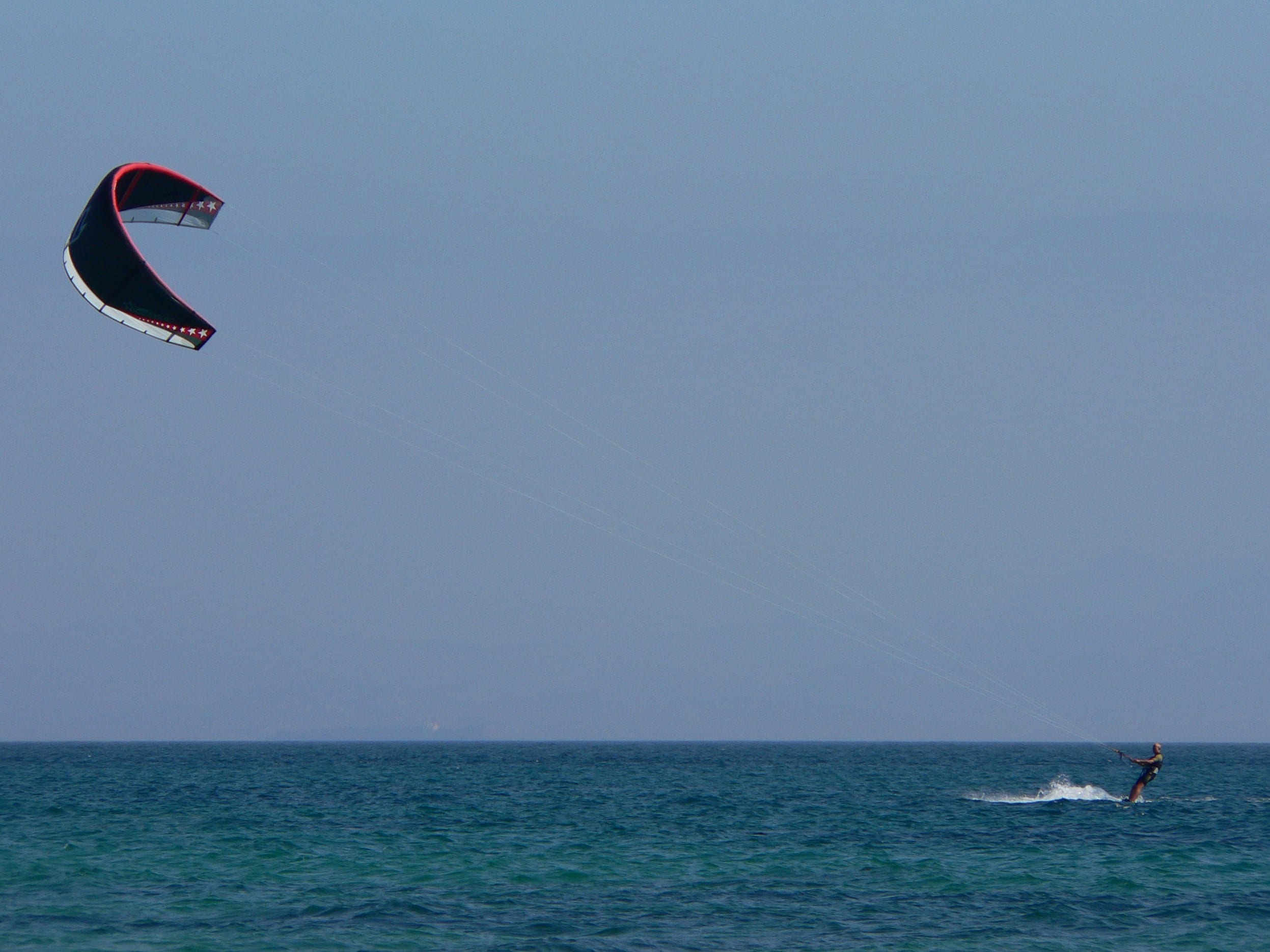
Kitesurfing — Several kitesurfing schools are based on the lagoon, which offers ideal conditions for the sport.
Windsurfing & catamaran — Available through the nautical clubs in the tourist area, for all levels.
Jet-ski & paddleboarding — Offered year-round by local centres, from first-timers to experienced riders.
Sea fishing — Excursions available from Ajim and other local ports.
Golf — The Djerba Golf Club features a 27-hole course set within a palm grove, designed by British architect Martin Hawtree. Opened in 1996, it stretches along the seafront in the Midoun tourist zone, complete with a clubhouse, panoramic restaurant, pro shop and a 30-bay driving range.
Horse riding — Guided rides are on offer, including a sunset horse-and-swim experience that is truly memorable.
Quad biking — Guided excursions through the semi-desertic landscapes of the island's interior.
Cycling & hiking — Djerba's flat terrain is perfectly suited to cycling along coastal tracks and through olive groves.
BEYOND DJERBA
With its international airport, Djerba is an ideal gateway to the Tunisian south. Local agencies and hotels offer a wide variety of tours, tailored to every type of traveller.
DISCOVERY
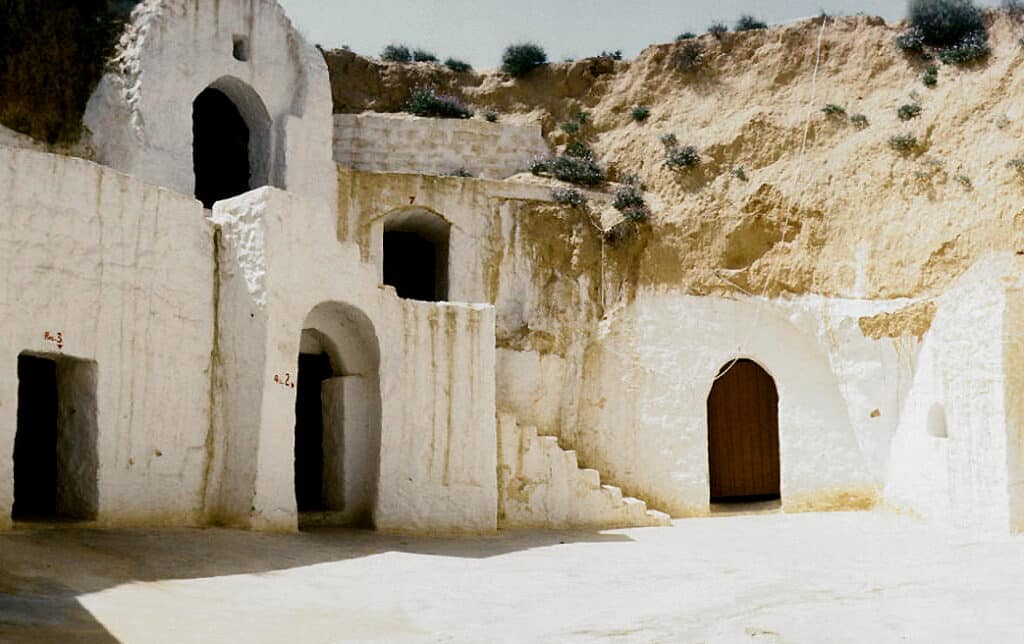
Around 2 hours by road, this Berber village is famous for its troglodyte dwellings carved directly into the rock, built around a central courtyard. Matmata also served as a filming location for the Star Wars saga — fans will recognise the Sidi Driss hotel, used as Luke Skywalker's home.
DISCOVERY
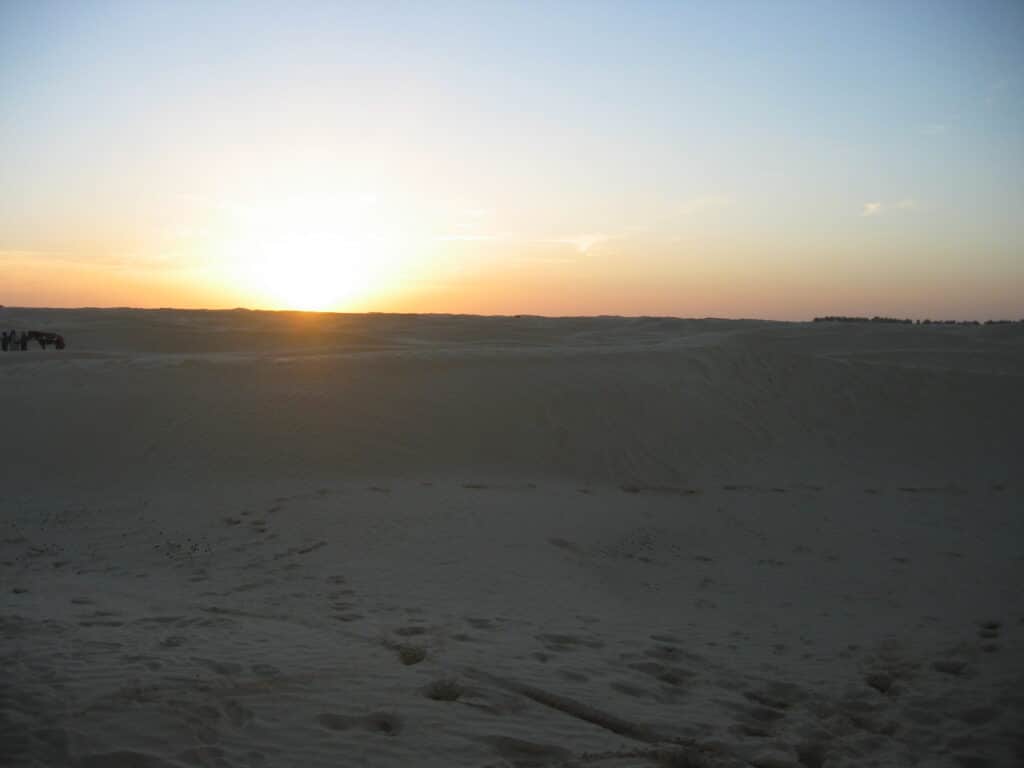
Around 4 hours from Djerba, Douz is the ideal jumping-off point for exploring the great Saharan dunes. Its lively souk hosts a Thursday livestock market, and camel rides through the white sand dunes are an unmissable experience.
DISCOVERY
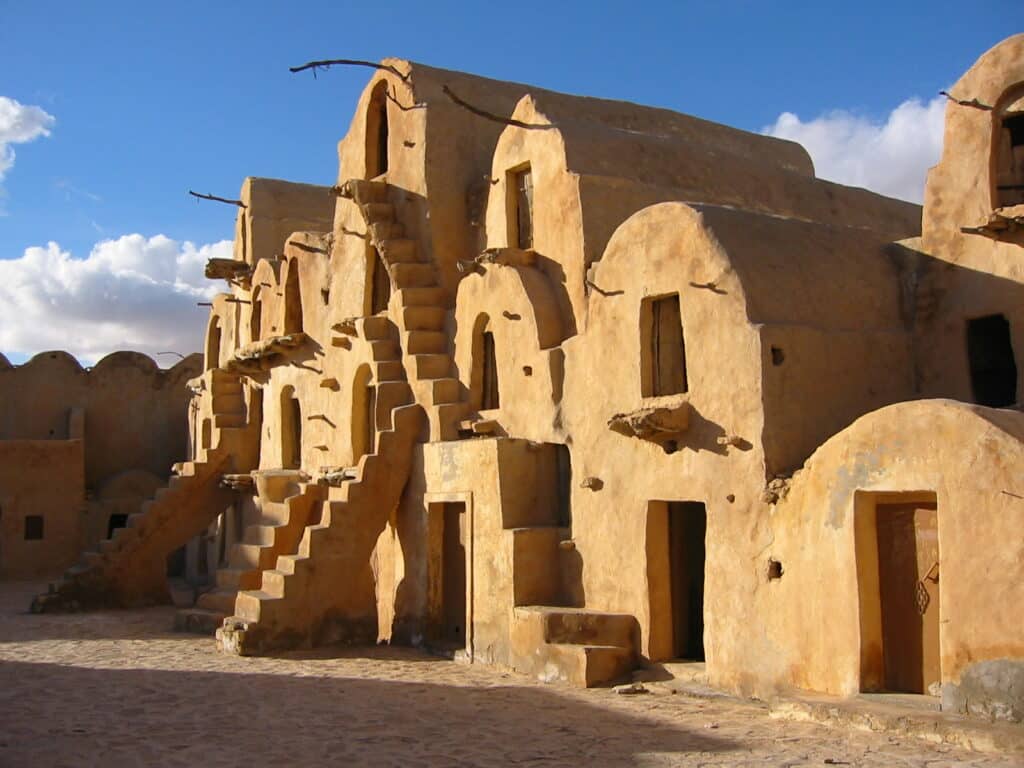
The Tataouine region is home to remarkable ksour (fortified Berber villages), including Ksar Ouled Soltane, an iconic site that inspired the Star Wars set designers.
DISCOVERY
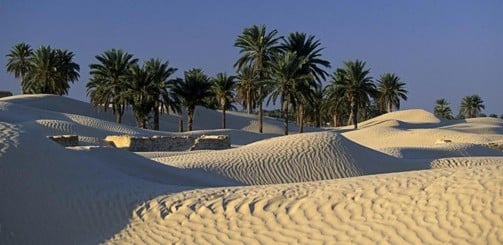
This oasis, around 120 km from Djerba (3 hours by road), is renowned for its natural hot spring, its palm trees and its golden dunes — perfect for quad biking or a camel trek.
DISCOVERY
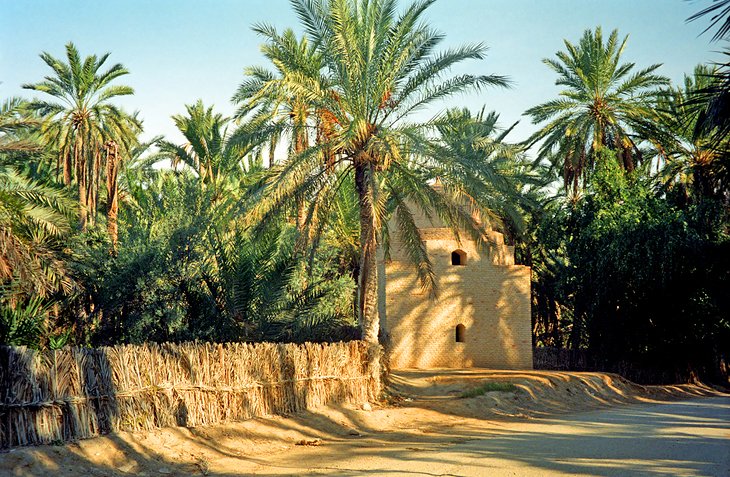
Around 6 hours from Djerba, this legendary city captivates with its vast palm groves, mountain oases and distinctive pisé brick architecture. It also serves as the gateway to the Chott El Jerid, an immense salt lake famous for its hypnotic mirages.
The’Djerba Island It's easy to visit in addition to diving. From our bases in Beach Center and the Aldiana Club, you can switch between dive sites, activities and exploring the island of Djerba. See our rates or Contact Us. Official tourist information on Discover Tunisia.